Holiday Rental Peak Season Checklist for Queensland Owners
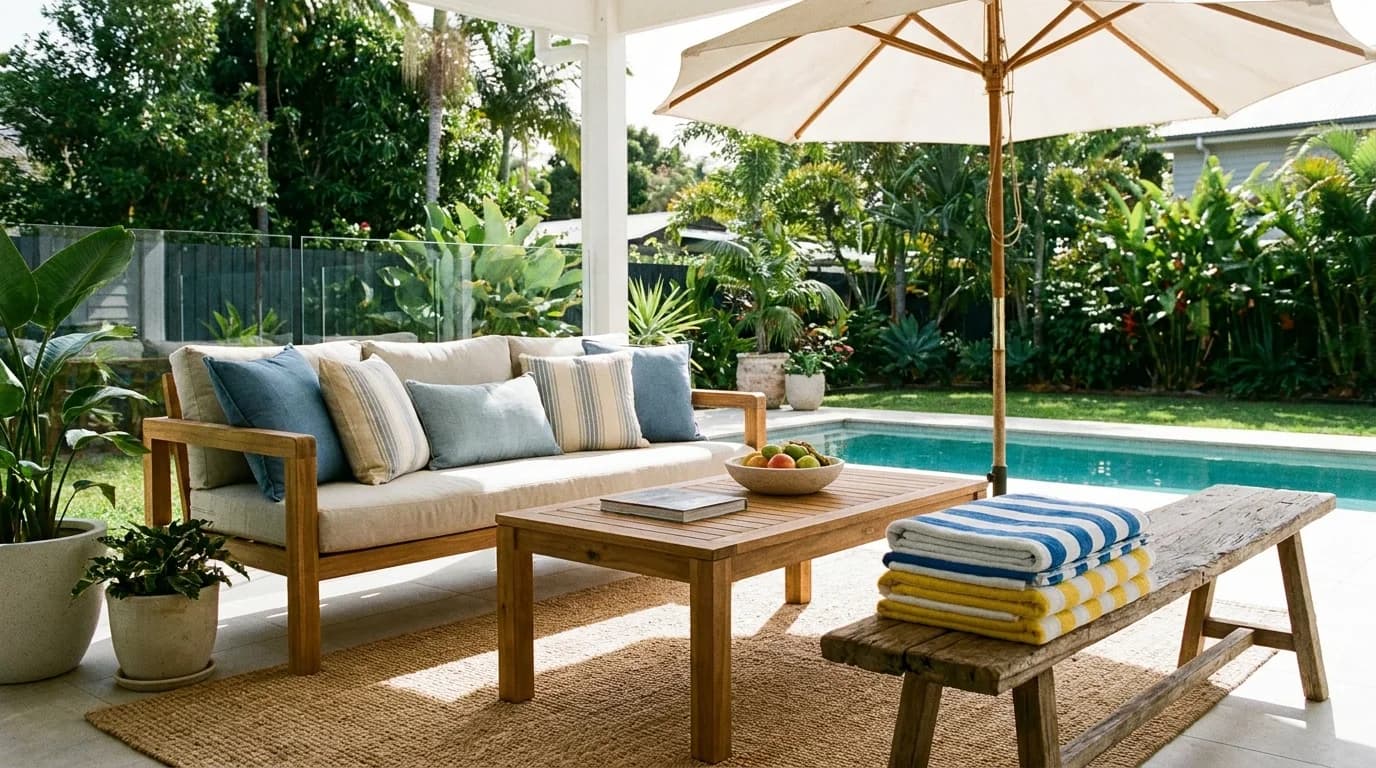
Peak season is where a Queensland holiday rental earns its keep. A well-prepared property on the Gold Coast or Sunshine Coast can generate a large share of its annual income in a handful of school-holiday weeks — but only if the calendar, the pricing and the property itself are ready before the booking rush starts. December is the worst possible month to find a tradesperson, replace dead linen or fix a listing that isn't converting.
This holiday rental checklist covers the deep clean, maintenance and safety sweep, restocking, pricing, listing refresh and changeover logistics. Work through it six to eight weeks out and peak season becomes a payday rather than a scramble.
When peak season hits in Queensland (and why prep starts early)
Queensland's holiday rental demand runs on a predictable rhythm:
- Summer school holidays (mid-December to late January) — the biggest earning window of the year, anchored by Christmas and New Year.
- Easter and the autumn school holidays — a short, intense spike, especially in family-oriented markets like Noosa and the northern Gold Coast.
- Winter (June to September) — the southern escape season, when Melbourne and Sydney travellers chase warmth. Coastal Queensland's "second peak".
- Event weekends — major sporting events, concerts and festivals can produce peak-level rates outside the traditional windows.
The catch: travellers book these periods months ahead — families locking in Christmas accommodation are often searching in August and September. If your property isn't presentable, priced and open on the calendar by early spring, you're competing for the leftovers. Preparing a holiday rental for peak season is a shoulder-season job, not a December one.
Deep clean and presentation: the pre-season reset
Regular changeover cleans keep a property tidy; they don't keep it fresh. Right before your biggest season, it needs a genuine deep clean. Use this Airbnb deep clean checklist as the baseline:
- Steam-clean carpets, rugs and upholstered furniture
- Wash walls, skirting boards, light switches and door frames
- Clean inside the oven, rangehood filters, dishwasher filter and behind appliances
- Empty and wipe out every cupboard and drawer — discard chipped crockery and orphaned containers
- Wash curtains; dust and wipe blinds and ceiling fans
- Clean windows and screens inside and out (salt haze builds fast on coastal properties)
- Descale showerheads, re-seal or scrub grout, treat any mould in wet areas
- Flip or rotate mattresses; wash mattress and pillow protectors
- Pressure-wash driveways, patios, outdoor furniture and the barbecue
While you're in every room, look at the property with guest eyes. Tired cushions or a dated bedspread are cheap fixes with an outsized effect on photos and reviews — our Airbnb furniture and styling guide covers what's worth spending on.

Maintenance and safety checks: aircon, smoke alarms, pools and decks
Nothing burns peak-season income like a breakdown with a full calendar and no available tradies. Run this holiday rental maintenance checklist in the shoulder season, while repairers still have capacity:
- Air-conditioning — professionally serviced, filters cleaned, every unit tested on a hot day. In a Queensland summer, a failed aircon is an emergency, not an inconvenience
- Smoke alarms — test every alarm and confirm the property meets Queensland's interconnected photoelectric alarm requirements (check the current QFES rules, as requirements are updated over time)
- Pool and spa — equipment serviced, water balanced, and pool safety certificate current; check gates, latches and fencing for compliance
- Decks, balconies and balustrades — inspect for movement, rot and loose fixings, especially in salt-air locations
- Hot water, taps and toilets — fix drips and slow drains now; test water pressure with multiple outlets running
- Barbecue — degreased, gas bottle full, igniter working
- Locks, lockboxes and smart locks — fresh batteries, codes tested, spare key process confirmed
- Pest control — annual treatment done before summer brings the ants and cockroaches out
- Appliances — run the dishwasher, washing machine, dryer and every burner; replace anything on its last legs before it fails mid-stay
Safety items aren't optional extras. Our guide to minimum housing standards for Queensland owners is written for long-term rentals, but the principle applies to holiday lets too: a safe, functional property is the entry fee, not a selling point.
Restock and refresh: linen, amenities and guest supplies
Peak season means more guests, shorter gaps and no margin for "we'll grab more next week". Stocktake before the rush:
Linen and towels
- At least two to three full linen sets per bed (three is the safe number for back-to-back summer changeovers)
- Retire anything stained, pilled, thinning or grey — white linen shows its age honestly
- Bath towels, hand towels, bath mats and face washers per guest, plus spares
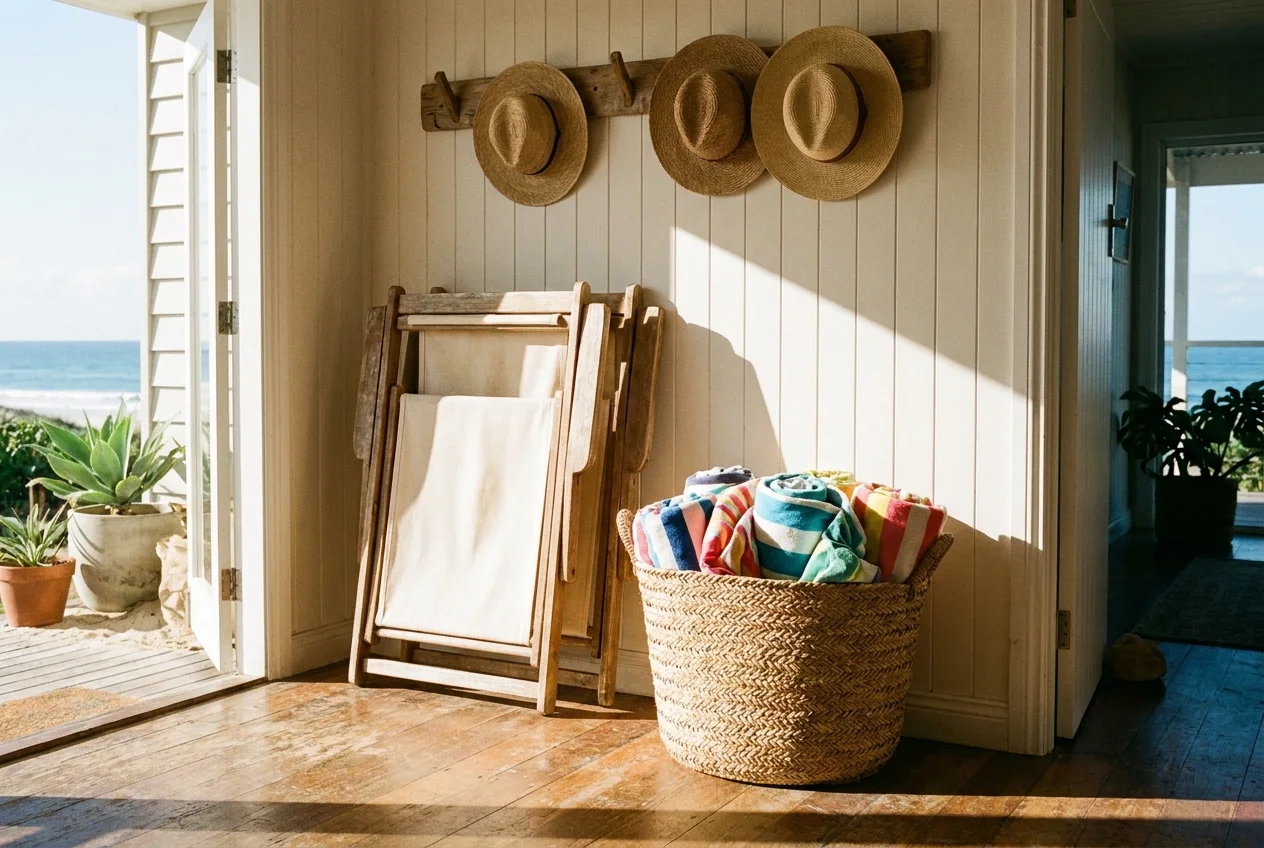
- Beach towels — guests notice when a beach property doesn't provide them
Kitchen and consumables
- Cooking basics: oil, salt, pepper, foil, cling wrap, paper towel
- Tea, coffee (with a working machine and the right pods or grounds), sugar, long-life milk
- Dishwashing liquid, dishwasher tablets, sponges, bin liners
- Matching crockery, glassware and cutlery for the full guest count — plus a few spares
Bathroom and laundry
- Toilet paper (generous multi-roll supply), hand soap, shampoo, conditioner, body wash
- Hair dryer in every bathroom or bedroom
- Laundry powder, pegs, iron and ironing board
The Queensland extras
- Sunscreen, insect repellent and a basic first-aid kit
- Beach chairs, a beach umbrella or shelter, sand toys for family markets
- Board games, a deck of cards, and reliable, clearly labelled Wi-Fi
Pricing for peak season: custom rates and minimum stays
Pricing for peak season Airbnb calendars is where the most money is won or lost. Underprice Christmas week and you sell your best inventory at shoulder-season rates; overprice it late and you sit vacant while comparable listings fill.
- Open your calendar early. Peak weeks should be bookable by late winter, at rates you'd be happy to hold.
- Set custom rates for every high-demand window — Christmas/New Year, each school-holiday block, Easter and known event weekends. Don't let a default nightly rate apply to the 31st of December.
- Use dynamic pricing, but supervise it. Pricing tools still need human overrides for local events and the quirks of your suburb.
- Set minimum stays. A 5–7 night minimum across Christmas and New Year is standard in most Queensland coastal markets. It protects the calendar from a two-night booking landing in the middle of your most valuable fortnight.
- Relax restrictions as dates approach. If a peak week hasn't sold four weeks out, shorten the minimum stay and adjust the rate rather than riding a vacant week to zero.
- Block owner weeks now. Decide when you're using the property yourself before guest bookings decide for you.
Our comparison of Airbnb versus long-term rental returns shows how heavily short-stay income depends on capturing these seasonal highs.
Listing and photo refresh before the booking rush
Your listing does the selling months before the guest arrives, so refresh it early:
- Re-shoot photos if you've restyled, renovated or if the current set is more than a couple of years old — the hero image decides your click-through rate
- Lead with your strongest peak-season asset: pool, ocean view, alfresco dining, proximity to the beach
- Update the headline and description to mention summer-relevant features (air-conditioning throughout, fans, pool, shaded outdoor areas)
- Check the amenities list is complete and accurate — filters like "pool", "aircon" and "parking" are how families search
- Refresh your digital guidebook: current restaurant picks, markets, patrolled beaches, wet-day options
- Review house rules and screening settings — peak season brings more enquiries, not automatically better ones
Changeover logistics: cleaners, linen, back-to-back bookings
Summer in a busy market like Broadbeach or Mooloolaba means back-to-back bookings with same-day turnarounds. Five-star cleanliness ratings through January belong to the properties that locked in logistics early:
- Confirm your cleaning team's peak-season capacity in writing — before the bookings land, not after
- Agree same-day changeover procedures and a realistic checkout/check-in gap
- Arrange commercial linen hire or enough owned sets that laundry never blocks a check-in
- Set up a mid-stay service option for longer bookings
- Line up an on-call handyman, plumber and electrician for guest-in-residence emergencies
- Build a restock run into every changeover so consumables never run dry
- Have a backup cleaner contact — someone will get sick in the second week of January
This is where self-managing owners feel the strain most — and it's the core of what a professional holiday rental management service does daily across the Gold Coast and Sunshine Coast.
FAQs
When is peak season for holiday rentals in Queensland?
The main peak runs from mid-December to late January, covering Christmas, New Year and the summer school holidays. Easter and the winter months (June to September) form strong secondary peaks, with southern travellers driving winter demand on the Gold Coast and Sunshine Coast. Event weekends can spike demand at any time of year.
How do I prepare my house for holiday rental?
Start six to eight weeks out: complete a deep clean, run a maintenance and safety check (aircon, smoke alarms, pool compliance), restock linen and supplies, then refresh your photos and listing copy. Finally, set custom peak rates and minimum stays, and confirm cleaning and linen arrangements for back-to-back changeovers.
What should I stock in a holiday rental?
At minimum: two to three linen sets per bed, towels per guest plus spares, kitchen basics (tea, coffee, oil, salt and pepper), cleaning consumables, toiletries, and a first-aid kit. In Queensland, guests also expect air-conditioning, fast Wi-Fi, sunscreen, insect repellent and beach gear — small touches that show up directly in reviews.
Should I set a minimum stay during peak season?
Yes — in most Queensland coastal markets a 5–7 night minimum over Christmas and New Year is standard, with 3–5 nights across other school-holiday periods. Minimum stays stop short bookings fragmenting your most valuable weeks; relax them as dates approach if a week hasn't sold.
Peak season rewards preparation, and it punishes improvisation. If you'd rather every item on this checklist was handled as a matter of routine — pricing, cleaning teams, linen, maintenance and guest communication included — talk to UrbanShore. We manage holiday rentals across South East Queensland and can have your property season-ready without it running you ragged.

Owner insights, once a month.
Market notes, regulation changes and practical guides for South-East Queensland property owners. No noise.
Free Appraisal
Want advice specific to your property?
Get a free appraisal from the UrbanShore team — long-term rent and short-stay income, side by side.
Prefer to write it out? support@urbanshore.com.au